Course Description
| Target Audience | Agribusiness Entrepreneurs and Farm Owners, Agricultural Value Chain Actors, Agro-processors and Marketers, Cooperative Leaders and Farmer Associations, Agricultural Extension Officers, Development Practitioners and NGOs, Policy Makers and Regulators in Agriculture, Financial Institutions supporting Agribusiness, Project Managers in Agricultural Programs |
INTRODUCTION
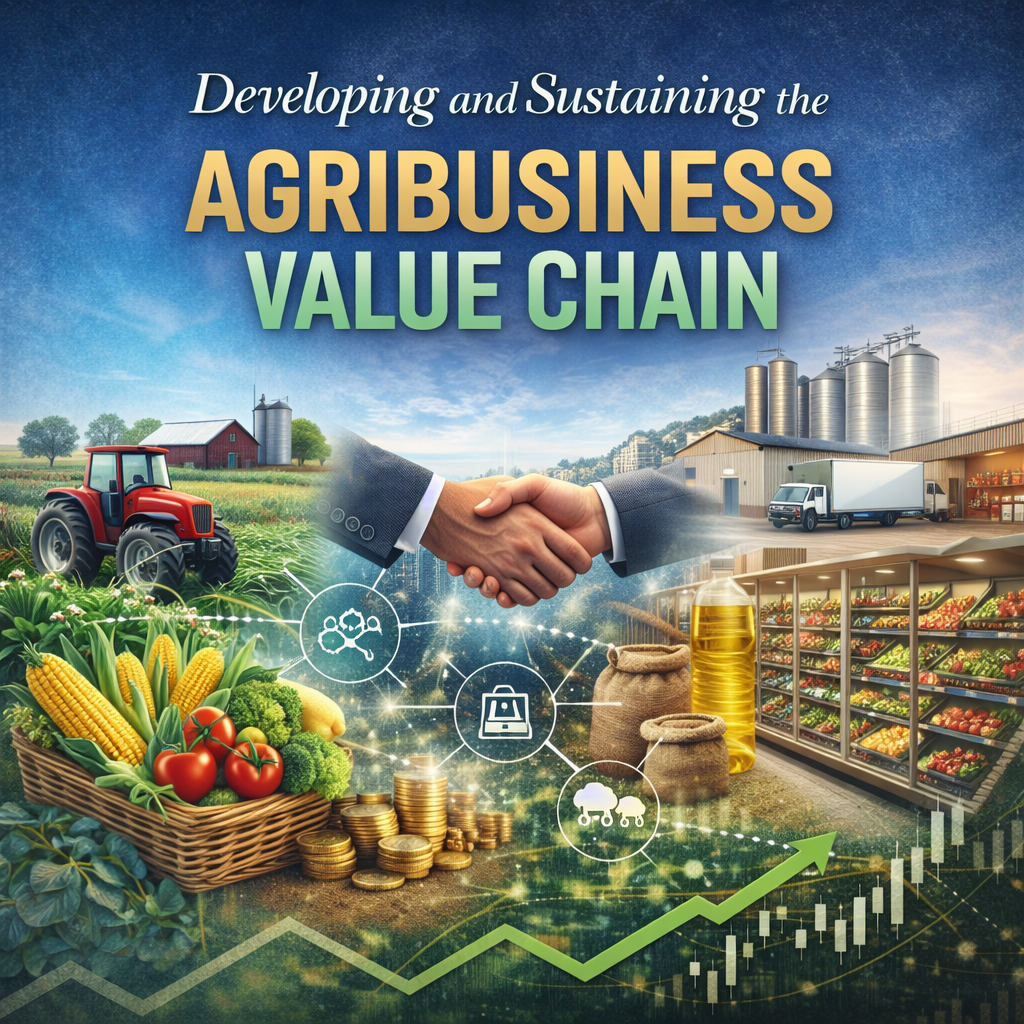
Agribusiness plays a critical role in economic growth, food security, employment, and rural development. However, many agribusinesses struggle not because of production challenges alone, but due to weak linkages across the value chain from input supply and farming to processing, marketing, and distribution.
This two-day training is designed to help participants understand the agribusiness value chain as a connected system rather than isolated activities. The training focuses on practical strategies for developing, strengthening, and sustaining value chains that are efficient, competitive, and resilient. Participants will explore real-world challenges, opportunities, and best practices for improving coordination, adding value, managing risk, and ensuring long-term sustainability across the agribusiness ecosystem.
COURSE OBJECTIVES
By the end of this training, participants will be able to:
Understand the agribusiness value chain and its key components
Identify gaps, inefficiencies, and opportunities within value chains
Strengthening linkages among farmers, processors, marketers, and financiers
Apply strategies for value addition and market development
Improve coordination, governance, and partnerships across the value chain
Manage risks affecting agribusiness operations
COURSE OUTLINE
Module 1: Understanding the Agribusiness Value Chain
What the agribusiness value chain means in practice
Key actors and their roles
How value is created along the chain
Common challenges in agribusiness value chains
Module 2: Mapping and Analyzing Agribusiness Value Chains
Value chain mapping techniques
Identifying bottlenecks and inefficiencies
Understanding cost, value, and margins
Practical examples from key agricultural commodities
Module 3: Input Supply, Production, and Productivity
Role of quality inputs and services
Improving farm-level productivity
Technology and innovation in production
Supporting smallholder farmers
Module 4: Post-Harvest Handling and Value Addition
Reducing post-harvest losses
Processing and packaging opportunities
Quality standards and certification
Enhancing product value and competitiveness
Module 5: Market Access and Distribution Strategies
Understanding market demand and consumer preferences
Linking producers to markets
Pricing, branding, and market positioning
Domestic and export market opportunities
Module 6: Financing the Agribusiness Value Chain
Funding needs across the value chain
Access to finance and credit options
Role of financial institutions and investors
Risk-sharing and innovative financing models
Module 7: Governance, Coordination, and Partnerships
Importance of coordination among value chain actors
Role of cooperatives, associations, and clusters
Public–private partnerships
Contract farming and out-grower schemes
Module 8: Managing Risks in Agribusiness Value Chains
Production, market, climate, and financial risks
Risk mitigation and resilience strategies
Insurance and risk management tools
Building shock-resistant value chains
Module 9: Sustainability and Inclusiveness in Agribusiness
Environmental sustainability and climate-smart agriculture
Social inclusion and gender participation
Youth engagement in agribusiness
Long-term value chain sustainability
Module 10: Developing a Sustainable Agribusiness Value Chain Action Plan
Turning learning into practical strategies
Designing value chain improvement plans
Measuring performance and impact
Key success factors for sustaining value chains.
Course Details
- Duration: 2 days
-
Available Formats:
- Physical Attendance - ₦187,500
- Virtual Attendance - ₦165,000
-
Available Dates:
- Mar 30, 2026
- Jul 01, 2026